

When you’re budgeting electricity or trying to figure out if your backup generator can handle the fridge, one question comes up a lot: how many watts does a refrigerator use?
The answer depends on the model, size, and even the local climate. In humid places like Miami, fridges tend to work a little harder. Whether you’re running a standard kitchen unit, a small dorm-style fridge, or something more energy-efficient, understanding your refrigerator’s watt usage can help you avoid surprises on your electric bill and prevent overloading your power supply during an outage.
Let’s break down everything you need to know, from wattage per hour and per day, to how usage differs by size, style, and even brand.
How Many Watts Does a Refrigerator Use?
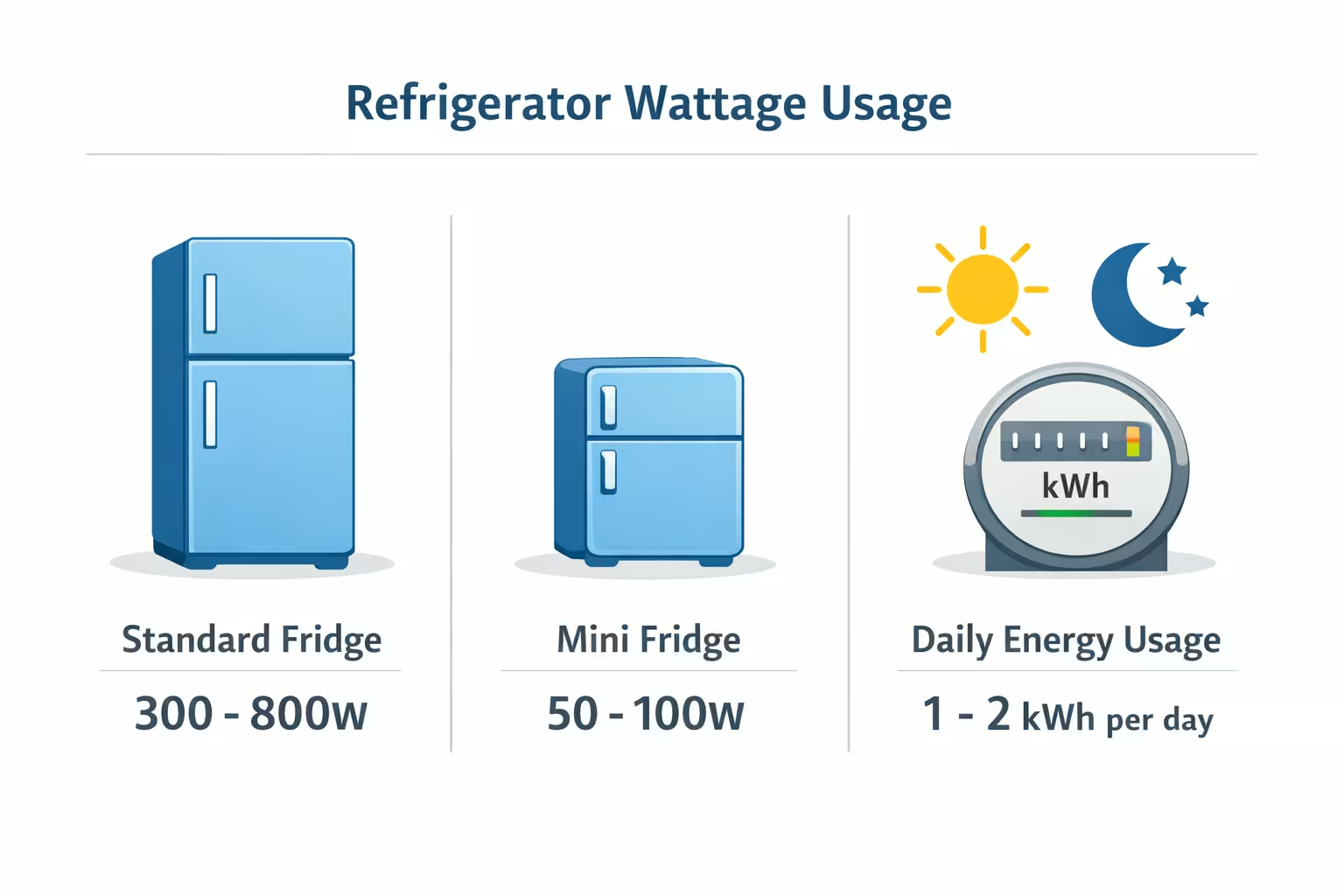
Most standard refrigerators use between 300 and 800 watts, depending on age, size, and efficiency. That’s their running wattage, meaning how much power they draw during normal use.
However, fridges don’t pull that full amount continuously. They cycle on and off throughout the day. On average, a typical refrigerator uses about 150 to 300 watts per hour while running.
Quick Estimate:
- Modern Energy Star fridge: ~150–200 watts
- Older full-size fridge: ~500–800 watts
- Compact or mini fridge: ~50–100 watts
This is a general guideline. For a more accurate number, check the manufacturer label inside the fridge or look at your model’s energy guide.
How Many Watts Does a Refrigerator Use Per Day?
Now let’s talk real-world usage. Since refrigerators cycle on and off throughout the day, their daily consumption is lower than you might expect based on max wattage.
Typical Daily Consumption:
A refrigerator that runs for 8 hours total per day (on and off cycles) at 150 watts would use about:
150 watts × 8 hours = 1,200 watt-hours, or 1.2 kilowatt-hours (kWh) per day.
This matches common utility estimates:
Most refrigerators use between 1 to 2 kWh per day
In Miami’s humid climate, cooling systems tend to work harder. So if your appliance is older, overstuffed, or placed in a warm kitchen corner, it may lean toward the higher end of that range.
How Many Watts Does a Refrigerator Use Per Hour?
While most full-size fridges don’t run continuously, their average hourly usage (while active) lands around 100 to 250 watts per hour. That may spike when the compressor first kicks in, but otherwise stays steady unless airflow or temperature settings are off.
How Many Watts Does a Small Refrigerator Use?
If you have a mini fridge or compact refrigerator, often used in offices, dorms, or rentals, your usage is likely lower.
- Mini fridge wattage range: 50 to 100 watts
- Daily use: About 0.6 to 0.8 kWh per day
- Monthly impact: Roughly 18–25 kWh
For anyone asking how many watts does a 1.7 cu ft refrigerator use or how many watts does a small refrigerator use, this range fits most models under 3 cubic feet.
Refrigerator wattage by type and brand
| Type | Average watts | Notes |
|---|---|---|
| Standard refrigerator | 300 to 800 watts | Common in most homes |
| Side-by-side refrigerator | 500 to 700 watts | Slightly higher due to larger size |
| French door models | 400 to 700 watts | Energy-efficient but wide |
| Refrigerator freezer combo | 350 to 800 watts | Includes both units |
| Mini/compact fridge | 50 to 100 watts | Great for dorms or RVs |
| 12-volt RV refrigerator | 40 to 60 watts | Runs on DC power |
| Samsung refrigerator | 150 to 400 watts | Most models Energy Star certified |
| Whirlpool refrigerator | 150 to 600 watts | Depends on age and features |
| Frigidaire refrigerator | 140 to 500 watts | Standard models vary by size |
| GE refrigerator | 150 to 500 watts | Newer models typically efficient |
Starting, Running and Surge Wattage Explained
There’s a difference between starting watts, running watts, and surge watts.
- Starting watts: The brief spike in power when the compressor first turns on (usually 2–3x the running wattage)
- Running watts: The typical power draw while in operation
- Surge watts: Maximum possible draw during a short demand (like during a restart)
For example, a fridge with a running wattage of 150 watts might need 400 to 600 starting watts.
If you’re using a generator, this number matters.
How Many Watts Does a Refrigerator Use on a Generator?
This is an important concern for Miami residents preparing for hurricane season.
- Minimum generator size for 1 fridge: 800 to 1,200 watts (to cover startup and running power)
- Two appliances or more? Consider a 2,000-watt or larger generator for safety
Tips to Reduce Your Refrigerator’s Energy Usage
- Keep it away from heat sources like ovens or direct sunlight
- Don’t overfill or block vents
- Check door seals for leaks or gaps
- Clean coils every few months
- Set the temperature to 37–40°F for the fridge, 0°F for the freezer
If your refrigerator runs constantly, makes strange noises, or doesn’t cool evenly, it could be time for a checkup.
When to Call for Refrigerator Repair in Miami
If your energy bills are climbing and you suspect your fridge is the culprit, we can help.
ARS Repair Inc. offers expert appliance repair across Miami. Our team can:
- Diagnose and repair refrigerator issues fast
- Replace worn-out compressors or thermostats
- Help you determine if it’s more cost-effective to repair or replace
We service all major brands including Samsung, Whirlpool, GE, and Frigidaire.
Final Thoughts
So, how many watts does a refrigerator use? It varies, but most fall between 100 and 800 watts, with daily usage around 1 to 2 kWh. Understanding your appliance’s power draw can help you plan better for energy use, emergency backup power, or even replacement decisions.
If your refrigerator isn’t working efficiently or stops working altogether, the team at ARS Repair Inc. is just a call away.