

Appliance repair for Florida property managers is not just a maintenance line item. It affects tenant retention, lease compliance, insurance claims, and your reputation with owners and HOA boards. In South Florida, heat, humidity, salt air, and heavy daily use push refrigerators, washers, dishwashers, and dryers harder than in most U.S. markets. What follows covers what the law expects, which appliances fail most often in rentals, how to run a repair workflow, and when preventive service pays off.
Why Florida rentals face more appliance stress
South Florida properties run cooling and laundry equipment year-round. Condenser coils collect dust faster near coastal roads. Door gaskets on refrigerators crack sooner in humid kitchens. Stackable washer-dryer pairs in condos vibrate against walls that share plumbing with neighbors. A single slow leak from a dishwasher supply line can damage cabinetry before a tenant even notices.
Property managers who treat appliance repair as reactive only often see the same unit on the work-order board every few months. Managers who pair fast response with documentation and prevention reduce emergency calls and owner complaints.
Florida landlord duties for appliances
Florida law does not require landlords to supply every appliance. If you include a refrigerator, range, dishwasher, microwave, washer, or dryer in the unit or lease, you are generally responsible for keeping it in good and safe working order unless the lease clearly assigns otherwise.
What Statute 83.51 requires
Under Florida Statute 83.51, landlords must maintain structural components, plumbing, and essential services in working condition. For many dwellings, that includes running water, hot water, and heat. Air conditioning is not always mandated statewide, but if AC is provided with the rental, courts and tenants often treat a failed system as a habitability issue in Florida’s climate.
The practical rule property managers use: if you provide it, you maintain it. Lease language should list every included appliance, its condition at move-in, and who handles filters, light bulbs, and damage from misuse.
Tenant responsibilities under Statute 83.52
Florida Statute 83.52 requires tenants to use appliances reasonably, keep plumbing fixtures clean, and avoid negligent damage. Tenants should report problems promptly. Normal wear and tear stays with the owner; burnt elements from aluminum foil in an oven or a washer drum damaged by heavy tools may be billable.
Document move-in appliance condition with photos, model numbers, and serial numbers. That file becomes your reference when a tenant claims an old gasket “was fine” at lease signing.
Recent Florida and South Florida law updates
State rules on included appliances are still grounded in Florida Statute 83.51 and your lease, but notice procedures changed in 2025. Effective July 1, 2025, Florida Statute 83.505 lets landlords and tenants deliver required Chapter 83 notices by email when both parties sign a separate addendum with valid email addresses and voluntary consent. That can cover appliance and habitability complaints that start the seven-day cure period under Florida Statute 83.56, but only if the addendum is signed and you keep a copy of the notice plus proof it was sent. Text messages and portal tickets alone still do not replace written notice unless your lease and the statute both allow the delivery method.
House Bill 241 for the 2026 session would have required landlords to provide and maintain cooling equipment on a set repair timeline. The bill was withdrawn before introduction and did not become law. There is still no statewide mandate to supply air conditioning, though you must maintain cooling if it is in the lease or was working at move-in. City and county housing or building codes in Miami-Dade, Broward, and Palm Beach can add local requirements, so confirm obligations with your attorney or local code office before you set owner expectations on AC, refrigerators, or laundry equipment.
For property managers, the shift is mostly recordkeeping. Log when a tenant notice arrives, how it was delivered, when repair was approved, and when service was scheduled. That paper trail matters when email notice is in play or when tenants ask about proposed cooling bills that never passed.
Most common appliance calls in Florida rentals
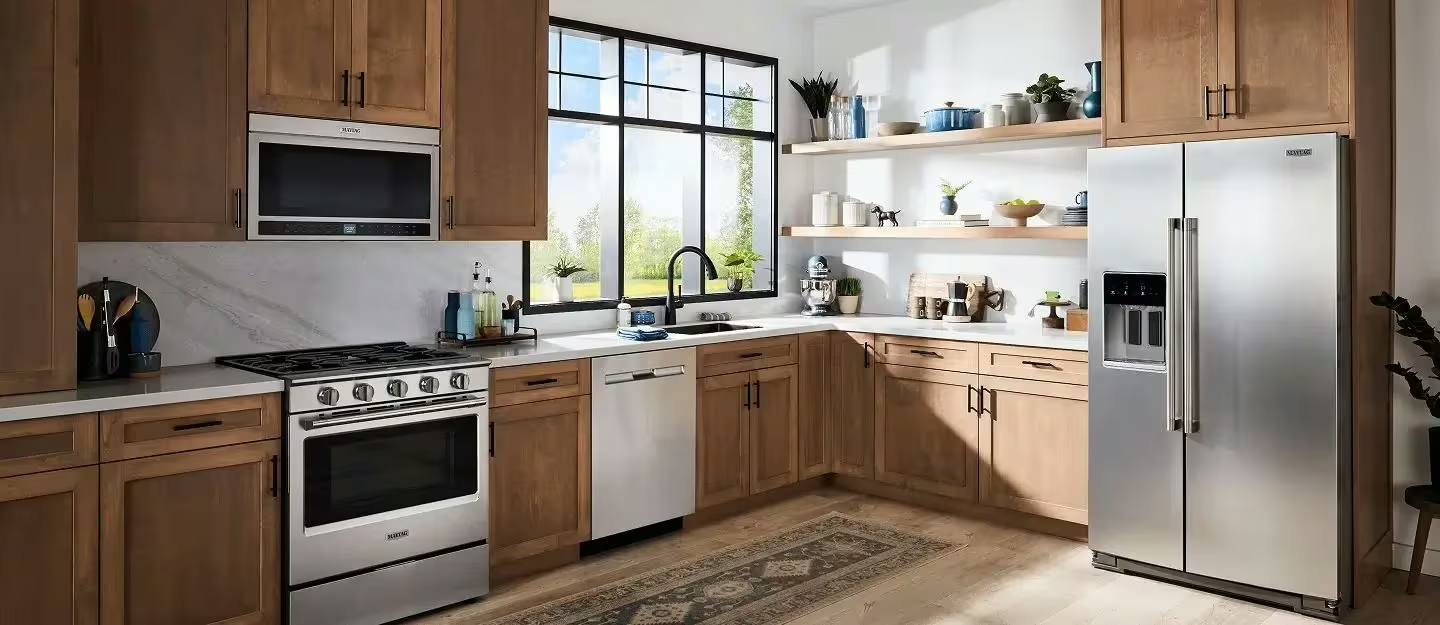
These rental unit appliance repair patterns show up most often across Miami-Dade, Broward, and Palm Beach:
| Appliance | Typical symptoms | Why it matters in rentals |
|---|---|---|
| Refrigerator | Warm sections, ice maker stopped, loud compressor | Food spoilage, health complaints, urgent callbacks |
| Washer | No drain, shaking, mid-cycle stop | Flooding risk, in-unit laundry is a top amenity |
| Dryer | Long dry times, no heat, burning smell | Fire hazard if vents are neglected |
| Dishwasher | Standing water, leaks, bad odor | Cabinet and flooring damage in tight condo kitchens |
| Range / oven | Uneven heat, igniter failures | Cooking safety and lease habitability disputes |
Refrigerators and washers generate the highest volume of after-hours calls. Scheduling refrigerator repair quickly limits spoilage claims. Fast dishwasher repair protects baseboards and lower cabinets in units where a small leak spreads fast.

Appliance repair for Florida property managers: repair workflow
The same steps on every call keep owners, tenants, and vendors on the same page.
Step 1: Intake and triage
Collect address, unit number, appliance type, brand, model number, symptoms, and photos. Ask whether power, water, or gas was interrupted. For leaks, tell the tenant to shut off the water valve behind the appliance if safe.
Step 2: Authorization and scheduling
Confirm the work order is approved before dispatch. For occupied units, coordinate access with the tenant or building concierge. Many managers use a dedicated property manager appliance repair program so authorization, scheduling, and documentation stay in one channel.
Step 3: Diagnosis, quote, and approval
Require itemized estimates for repairs above your spending threshold. Photos of failed parts help owners approve replacements without a second trip.
Step 4: Close-out documentation
Store invoice, warranty terms, before-and-after photos, and technician notes in the owner file. Good records support insurance claims and security-deposit disputes.

Preventive maintenance reduces emergency spend
Reactive repair always costs more than planned landlord appliance maintenance in Florida portfolios. Condenser coil cleaning, dryer vent inspection, dishwasher drain checks, and washer hose age reviews catch failures before they flood a unit.
A scheduled appliance maintenance program helps property managers:
- Lower emergency volume by fixing small issues during scheduled visits.
- Extend appliance life in units that turn over every 12 to 24 months.
- Support owner reporting with dated service logs for capital planning.
The U.S. Department of Energy notes that dirty refrigerator coils can raise energy use significantly and shorten compressor life. In Florida, that extra load shows up on owner utility bills in common-area metering and in resident complaints about warm fridges.
Condo, HOA, and high-rise logistics
South Florida portfolios include high-rises with freight elevator rules, COI requirements, and limited parking for service vans. Build a vendor packet with W-9, insurance certificate, and elevator booking instructions before the first emergency.
Share gate codes, parking validation steps, and a building contact who can escort technicians when fobs are required. Delays here look like “slow vendor” to owners even when the technician is on site.
Repair versus replace decisions
Repair when the unit is under five to seven years old, parts are available, and the repair cost sits well below replacement. Replace when the same part failed twice in 12 months, sealed-system work is needed on an old refrigerator, or rust and leaks show the unit is done.
Send owners a short note with the repair quote, replacement price, and how much life the appliance likely has left. Most approve faster when those numbers are side by side.
What to ask before you hire a repair vendor
Before you add a vendor to rotation, confirm they:
- Service the brands in your portfolio (Samsung, LG, Whirlpool, GE, Bosch, and others).
- Provide written estimates and warranty terms on labor and parts.
- Coordinate directly with tenants when you authorize it.
- Cover your counties without surcharges for Miami appliance repair and neighboring markets.
Avoid vendors who cannot supply photos, model data, or proof of license and insurance. Those gaps become problems during HOA audits or insurance subrogation.
What to keep in the file after each service call
- Work order number and authorized spending limit
- Tenant or access contact and appointment window
- Appliance brand, model, and serial number
- Symptom description and prior repair history
- Technician diagnosis and parts replaced
- Warranty period on labor and parts
- Photos of completed work when requested
Keep this folder updated after every call. It backs you up when a tenant claims an issue was “never fixed” or an owner questions a capital expense.
Seasonal priorities for South Florida portfolios
Spring and summer: AC-adjacent loads rise; refrigerators and freezers work harder. Check door seals and coil cleanliness before peak heat.
Hurricane season: Power surges after outages damage control boards. After restoration, spot-check refrigerators, washers, and dishwashers for error codes.
Turnover season: Test every included appliance during make-ready. Replace washing machine hoses older than five years. Clean dryer vents between tenants.
FAQ for Florida property managers
Are landlords required to provide appliances in Florida?
No. Florida law does not require landlords to furnish refrigerators, stoves, or laundry equipment. If appliances are included in the lease or unit at move-in, the landlord is typically responsible for maintaining them unless the lease states otherwise.
How fast must a landlord repair a broken appliance?
Florida law does not set a fixed hour count for every appliance. Landlords must act within a reasonable time. Refrigerator failures, flooding washers, and gas oven issues usually need same-day or next-day triage because delay can worsen property damage or habitability claims.
Can tenants withhold rent for a broken dishwasher?
Tenants should not withhold rent without following statutory notice procedures. Unauthorized withholding can trigger eviction. Managers should acknowledge the ticket, schedule repair, and document every step.
Who pays when a tenant damages an appliance?
Misuse or negligence is generally the tenant’s responsibility. Normal wear and tear belongs to the owner. Move-in photos and technician notes are your best proof.
Should property managers use in-house maintenance or outside vendors?
Small portfolios sometimes use handymen for simple jobs. Licensed appliance technicians are appropriate for refrigeration, gas ranges, and complex electronics. Mixing the two without clear scope creates warranty and liability gaps.
Appliance repair for your portfolio
Clear leases, fast triage, solid vendors, and scheduled maintenance cut down on repeat calls. ARS Repair Inc. works with property managers, landlords, condos, and HOAs across Miami-Dade, Broward, and Palm Beach on work orders, tenant scheduling, and service records.
Sources
- Florida Senate, Chapter 83 Section 51, Landlord’s obligation to maintain premises (2025).
- Florida Senate, Chapter 83 Section 52, Tenant’s obligation to maintain dwelling unit (2025).
- U.S. Department of Energy, Refrigerator and Freezer Use and Temperature Tips (coil maintenance and efficient operation).
- Florida Senate, Chapter 83 Section 505, Electronic delivery of notices (2025, effective July 1, 2025).
- Florida Senate, House Bill 241 (2026) (proposed cooling equipment requirements; withdrawn prior to introduction).